A Little Character Begins with a Shape
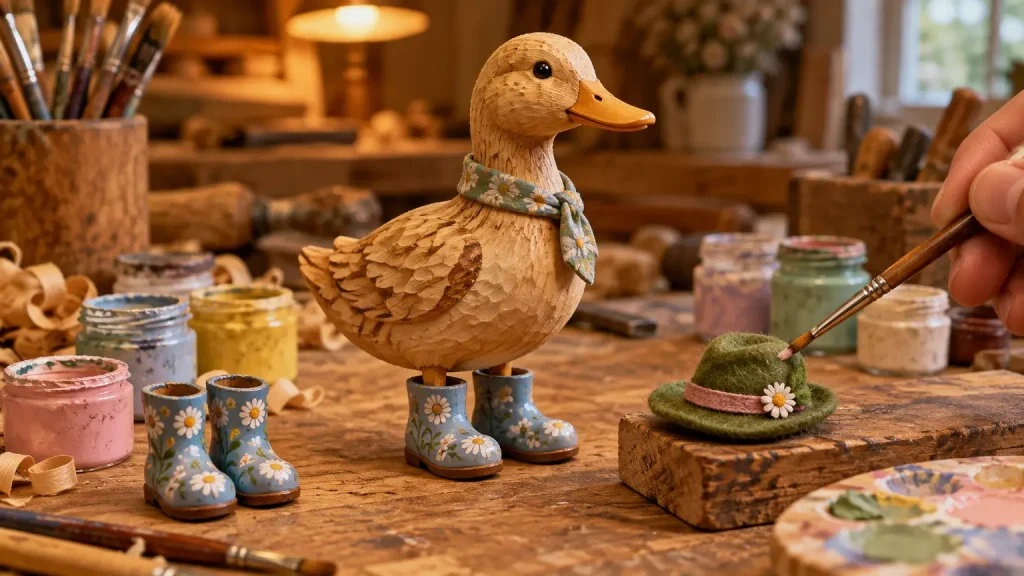
A wooden duck standing on a shelf can be surprisingly difficult to ignore. Perhaps it is the cheerful boots, the tilted hat, or that expression suggesting it has somewhere important to be. With hand carved wooden ducks, these small details turn a familiar bird shape into a character that feels right at home among books, plants, and favorite photographs.
Before any colorful accessory appears, an artisan considers the proportions of the body, neck, head, and beak. A gentle curve can make the duck look curious. A slightly raised head gives it a proud stance. Those choices establish the mood long before the first brush touches the wood.
The result depends on a balance of craft and imagination. A simple silhouette leaves room for decoration, while carefully shaped features ensure the finished figure still has the unmistakable character of a duck.
Where the Wood Sets the Rules
Every design starts with material that has its own texture and grain. A woodworker selects a piece suitable for the intended size and carving method, then studies how its natural features might affect the shape. Sound, well-prepared wood helps the maker create clean edges and a stable figure.
Carving tools gradually reveal the rounded body, slender neck, and distinct beak. Rough areas are smoothed, and sharp transitions are softened where the design calls for them. These stages can look modest, yet they influence how every painted detail will sit on the finished surface.
Wood also needs preparation before decorating. Dust, uneven patches, and unsuitable finishes can interfere with paint application. Careful sanding gives the artisan a more predictable surface, allowing bright colors and fine lines to appear as intended.
The Curious Business of Choosing a Hat
A hat changes everything. Put a little cap on a duck and it suddenly looks ready for a weekend outing. Give it a more formal style and the same pose suggests an entirely different personality. Accessories provide an easy way to tell stories through design.
An artisan may sketch ideas before choosing which details to carve, attach, or paint. Proportions matter here. An oversized hat can feel deliberately comic, while a restrained design may suit a quieter, more traditional decorative style.
The most successful choices also respect the figure itself. An accessory should complement the head and body without hiding the craftsmanship underneath. That takes a thoughtful eye, especially when the decorative space measures only a few centimeters across.
Why Tiny Boots Get So Much Attention
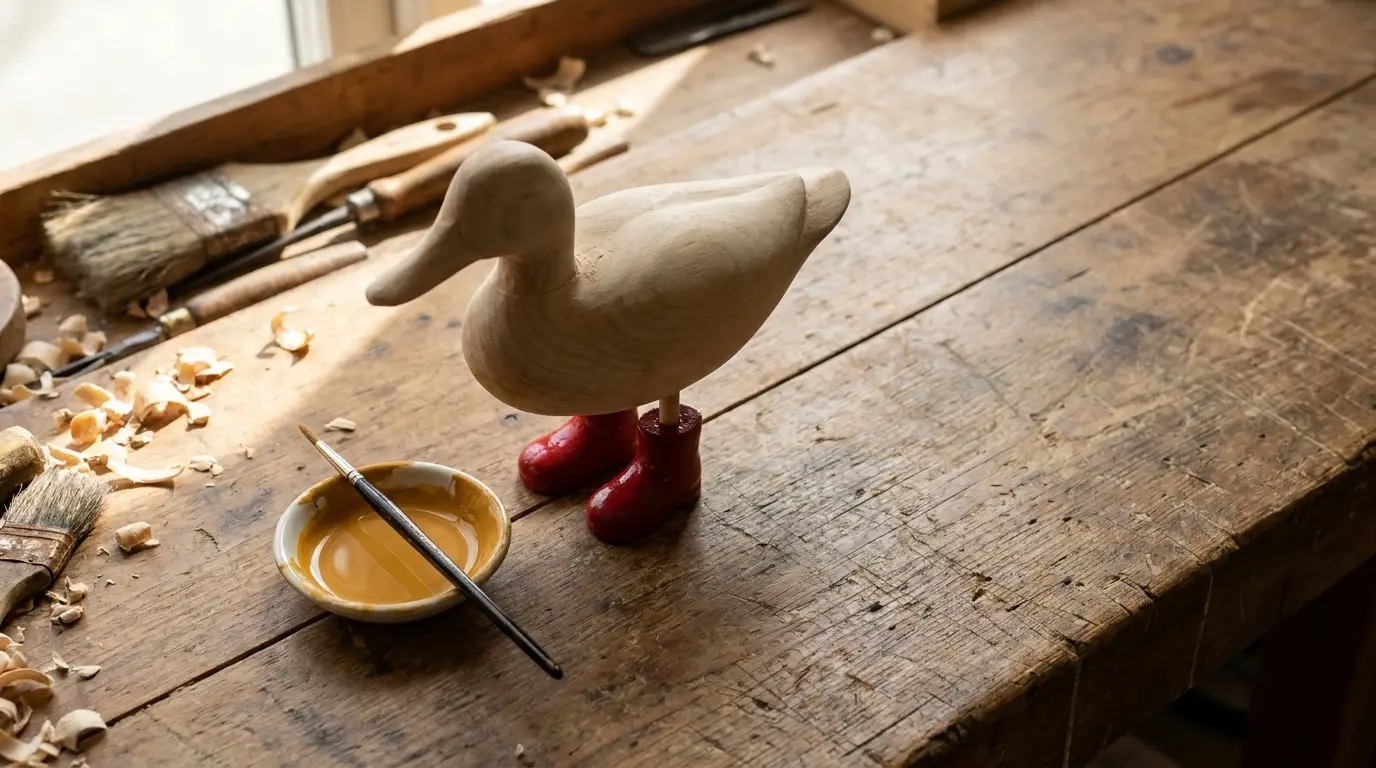
Boots have become a playful feature of many decorative wooden ducks, and it is easy to understand their appeal. Bright footwear adds color near the base, draws attention to the stance, and gives a familiar countryside bird the air of someone prepared for an adventure.
Designing miniature boots presents an interesting challenge. The shapes need to look convincing at a small scale, and the placement should support the overall pose. Painted seams, contrasting soles, or a glossy finish may add interest without crowding the design.
Footwear can also establish a theme. Soft green suggests garden days, cheerful yellow recalls rainy walks, and bold red creates an instant focal point. Even a small change in color can shift how the entire character feels.
The Brushwork Behind a Smile
Painting requires its own kind of patience. Once the carving is ready, a maker can build color in careful layers, allowing each stage to dry as appropriate for the materials used. Small brushes help define eyes, patterns, and other features that give the figure its expression.
A tiny adjustment to an eye or eyebrow can change the mood dramatically. Place a detail slightly differently, and a duck may look inquisitive rather than serious. The craft lies in keeping those markings clear and consistent with the intended character.
Finishing choices influence the overall effect, too. A muted palette works well with natural wood tones, while brighter combinations can create a lively accent for a kitchen or hallway. Protective coatings, when suitable for the design, help preserve the surface during ordinary display and handling.
Dressing for the Seasons and Everyday Life
A wooden duck can borrow inspiration from nearly anywhere. Gardening, coastal holidays, rainy afternoons, and festive celebrations all suggest colors and accessories. The possibilities make the decorating stage especially appealing to an artisan who enjoys turning everyday observations into small, recognizable details.
Seasonal characters can also offer an easy way to refresh home decor. A duck in autumn colors might join a display of leaves and dried flowers. A spring-inspired figure could sit beside a vase of fresh greenery, bringing a little humor to an otherwise simple arrangement.
Still, a themed figure need not disappear into storage after a particular occasion. Well-chosen colors and familiar motifs can remain attractive throughout the year, especially when the character reflects a hobby or memory that matters to its owner.
Finding a Place for a Dressed-Up Duck
Once finished, a wooden duck becomes part of the room around it. A bright character may work best against a plain backdrop where its details can stand out. A more understated piece can join textured ceramics, woven baskets, or timber furniture without making the display feel crowded.
Try grouping two or three figures with different heights or accessories. Leave space between them so each has room to be noticed. A tray or small shelf can give the arrangement a sense of purpose, particularly in an entryway or living room.
Placement deserves some practical thought as well. Stable surfaces help protect delicate features, while avoiding prolonged direct sunlight and damp conditions may reduce wear to decorative finishes. For routine cleaning, gentle dusting and the maker’s care advice are sensible starting points.
Small Details That Stay with Us
Part of the pleasure of handcrafted decoration comes from spotting something new each time. A neatly painted button, an unusual color combination, or a carefully shaped brim may go unnoticed at first. Then one afternoon, the light catches that detail and the little character seems freshly discovered.
These figures can also carry personal stories. A duck wearing garden boots might remind someone of a grandparent’s greenhouse. A cheerful hat may recall a favorite holiday. Choosing a gift with a particular personality gives that connection room to grow.
From the first carved curve to the final painted accent, every decision helps create an individual character. Set it on a shelf, let it become part of everyday life, and the craftsmanship keeps doing its work: bringing a small, familiar smile to the room.